
Giảm giá tốt nhất trong tuần này
Mỗi tuần bạn có thể tìm thấy giảm giá tốt nhất ở đây.

Muống gỗ

Bàn gỗ

Gấu gỗ trang trí

Ghế gỗ

Khỉ gỗ trang trí
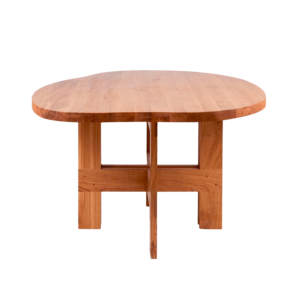
BÀn gỗ tròn
How Ancient Math Shapes Modern Symbols Like Eye Of Horus
1. Introduction: The Intersection of Ancient Mathematics and Symbolism
Throughout history, ancient civilizations developed sophisticated mathematical systems that served practical, ceremonial, and spiritual purposes. These early understandings of numbers, geometry, and ratios laid the groundwork for many symbols that continue to influence modern culture. Symbols are more than mere images; they encode complex ideas, beliefs, and knowledge, often rooted in mathematical principles.
Exploring how these ancient mathematical concepts inform modern symbols reveals a fascinating bridge between the past and present. For example, the scarab beetle slot symbols illustrate how ancient motifs are integrated into contemporary iconography, carrying with them layers of meaning derived from their mathematical and spiritual origins.
Contents
- Foundations of Ancient Mathematics in Egypt
- Mathematical Concepts Embedded in Ancient Egyptian Art and Symbols
- The Eye of Horus as a Mathematical and Symbolic System
- From Ancient Numerics to Modern Symbols: The Evolution of Mathematical Thought
- The Role of Precision and Measurement in Ancient Mathematical Achievements
- The Preservation of Ancient Mathematical Knowledge
- Connecting Ancient Math to Modern Symbols: Broader Implications
- Non-Obvious Dimensions: Cognitive and Cultural Impact of Ancient Math
- Conclusion: The Enduring Legacy of Ancient Mathematics in Modern Symbols
2. Foundations of Ancient Mathematics in Egypt
a. Mathematical practices in ancient Egypt: measurements, calculations, and record-keeping
Ancient Egyptians were pioneering mathematicians, primarily focused on practical applications such as land division, resource management, and architectural planning. They developed hieroglyphic numerals and methods for performing calculations that enabled them to record and transmit complex mathematical ideas across generations.
b. The role of geometry in architecture and monument construction
Geometry was integral to Egyptian architecture, especially in constructing pyramids and temples. Precision in measurements and understanding of spatial relationships allowed Egyptians to align structures with cardinal points and celestial bodies, reflecting their deep appreciation of mathematical harmony.
c. Examples: Pyramid alignments and their mathematical precision
| Example | Mathematical Aspect |
|---|---|
| Pyramid of Khafre | Alignment within 3 arc minutes of true north, demonstrating advanced celestial geometry |
| Giza Plateau | Use of right-angled triangles for layout, showcasing knowledge of Pythagorean principles (though predating Pythagoras) |
3. Mathematical Concepts Embedded in Ancient Egyptian Art and Symbols
a. The symbolic language of numbers and proportions in hieroglyphs
Egyptian hieroglyphs often incorporated numerical symbols and ratios that conveyed specific meanings. For instance, the use of the “shenu” symbol (a looped rope) represented eternity and unity, while proportions in art adhered to sacred ratios that emphasized harmony and balance.
b. The significance of the number 2.718 (approximate) in ancient calculations (e.g., papyrus longevity)
While the constant e (approximately 2.718) was formally recognized in modern mathematics, ancient Egyptians approximated similar ratios in their calculations. They expressed concepts of growth and decay in contexts like papyrus longevity, demonstrating an intuitive grasp of exponential-like processes.
c. How geometric ratios influenced the design of sacred symbols
The Egyptians used ratios like 1:2 and 3:4 in designing temples and symbols, ensuring aesthetic and spiritual harmony. These ratios often appeared in the proportions of the Eye of Horus, which we will explore further, as an embodiment of mathematical precision and spiritual symbolism.
4. The Eye of Horus as a Mathematical and Symbolic System
a. Historical origins and mythological significance of the Eye of Horus
Rooted in Egyptian mythology, the Eye of Horus represents protection, health, and royal power. According to myth, Horus’s eye was injured and subsequently restored, symbolizing healing and the restoration of order. Over centuries, it evolved into a powerful talisman and a symbol of divine protection.
b. The eye as a representation of fractional parts (e.g., 1/2, 1/4, 1/8, 1/16, 1/32, 1/64) and their mathematical meaning
Ancient Egyptians used the Eye of Horus to symbolize fractional divisions, critical for measuring parts of offerings and land. Each segment of the eye represented a specific fractional value, such as 1/2, 1/4, 1/8, etc., illustrating an early use of fractional mathematics. This encoding allowed precise communication of proportions and quantities.
c. How the symbol encodes concepts of health, protection, and the universe through mathematical ratios
Beyond fractions, the proportions within the Eye of Horus reflect universal principles of harmony. The ratios embedded in its design embody balance and order, resonating with the Egyptians’ cosmological views. This mathematical symbolism extends into their spiritual practices, reinforcing the idea that understanding ratios reveals the structure of the cosmos.
5. From Ancient Numerics to Modern Symbols: The Evolution of Mathematical Thought
a. The transmission of mathematical ideas from Egypt to other cultures
Egyptian mathematical achievements influenced Greek, Roman, and later Islamic mathematics through trade, conquest, and scholarly exchange. Greek mathematicians like Pythagoras and Euclid studied and expanded upon Egyptian geometric principles, embedding these ideas into Western mathematical tradition.
b. The influence of Egyptian geometry and numerics on later civilizations’ mathematics
Egyptian concepts of ratios, proportionality, and measurement became foundational in developing more abstract mathematical theories. These ideas persisted through the Renaissance and into modern science, demonstrating their enduring impact.
c. The enduring legacy of symbolic math in contemporary iconography
Modern symbols often draw from ancient motifs to convey complex meanings. The scarab beetle slot symbols exemplify how ancient symbols are reinterpreted in new contexts, blending historical significance with contemporary design.
6. The Role of Precision and Measurement in Ancient Mathematical Achievements
a. The significance of pyramid alignment accuracy (north within 4 minutes of arc)
Achieving such precision required advanced understanding of astronomy and geometry. This attention to detail reflects the Egyptians’ sophisticated mathematical knowledge and their desire to align their monuments with cosmic order.
b. Techniques used for precise measurements and their mathematical basis
Egyptians employed simple tools like plumb bobs, sighting rods, and geometric calculations to achieve remarkable accuracy. Their methods often involved right-angled triangles and proportional reasoning, demonstrating practical applications of geometric principles.
c. Implications for understanding ancient mathematicians’ sophistication
These achievements suggest that Egyptian mathematicians possessed an intuitive grasp of complex geometry and measurement techniques, predating formal proofs known today.
7. The Preservation of Ancient Mathematical Knowledge
a. The durability of papyrus and its role in transmitting mathematical knowledge over 3000+ years
Papyrus scrolls preserved Egyptian mathematical texts, including calculations, geometric diagrams, and numerical systems. Their durability allowed these ideas to influence subsequent cultures for millennia.
b. How the stability of written records contributed to the evolution of mathematical concepts
Consistent records fostered the refinement and dissemination of mathematical ideas, enabling the development of more advanced theories and their integration into daily life and spiritual practices.
c. Lessons from ancient preservation methods for modern scientific documentation
The ancient emphasis on durable record-keeping underscores the importance of accurate documentation in scientific progress, a principle still vital today.
8. Connecting Ancient Math to Modern Symbols: Broader Implications
a. How ancient mathematical principles influence contemporary symbols and logos
Designers frequently incorporate ratios and geometric harmony rooted in ancient math to create visually appealing logos and symbols. The use of golden ratios and symmetrical proportions in branding reflects these age-old principles.
b. The symbolic use of geometry and ratios in modern design and branding
Examples include corporate logos like Apple or Nike, which leverage geometric simplicity and proportion to evoke trust and balance—concepts that have their roots in ancient mathematical understanding.
c. The Eye of Horus as a bridge between ancient numerics and modern visual language
As an iconic example, the Eye of Horus encapsulates ratios, fractions, and harmony, demonstrating how ancient mathematical ideas continue to influence modern visual storytelling, symbolism, and even gaming symbols such as those found in scarab beetle slot symbols.
9. Non-Obvious Dimensions: Cognitive and Cultural Impact of Ancient Math
a. How mathematical understanding shaped ancient Egyptian worldview and spirituality
Mathematics was intertwined with their cosmology, influencing their perception of order, balance, and the divine. Sacred ratios and geometric harmony expressed their understanding of universal laws.
b. The cognitive processes involved in interpreting and creating symbolic mathematics
Creating symbols like the Eye of Horus required abstract thinking, pattern recognition, and proportional reasoning—skills that underpin modern mathematical cognition and artistic expression.
c. Cultural continuity: From ancient math symbols to modern spiritual and cultural identities
These symbols serve as cultural touchstones, linking contemporary identities with their ancient roots, illustrating the lasting influence of mathematical thought across millennia.
10. Conclusion: The Enduring Legacy of Ancient Mathematics in Modern Symbols
Ancient mathematics, exemplified by practices in Egypt, fundamentally shapes symbols like the Eye of Horus, which serve as repositories of cosmic, spiritual, and numerical wisdom. Understanding these connections enhances our appreciation of cultural heritage and the universal language of mathematics.
“Mathematics is the language in which the universe is written.” – Galileo Galilei
Fostering mathematical literacy allows us to unlock the deep historical and cultural narratives embedded in symbols like the Eye of Horus, enriching our perspective on human ingenuity and spiritual expression. Continued exploration of these links reveals the timeless dialogue between numbers, symbols, and the human experience.